Cart
0



Our sense of smell is often seen as a simple biological function, but in truth, it’s deeply intertwined with the mind. While our noses detect odours, it’s our brains that interpret, associate, and ultimately shape our perception of scent.
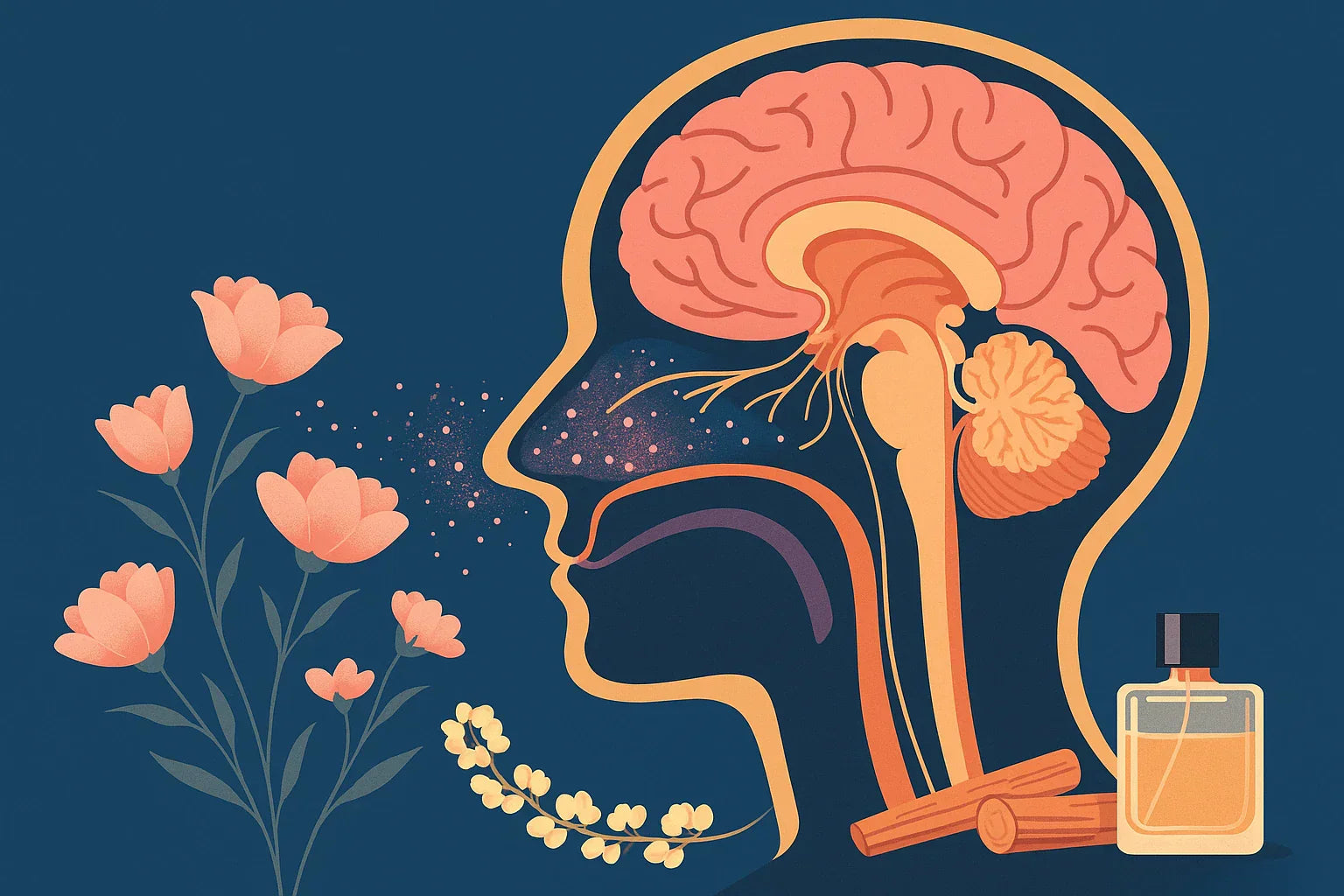
Scents trigger memories, emotions, and even subconscious responses. A familiar perfume can transport us back to childhood. The aroma of freshly baked bread might evoke a feeling of warmth and comfort. This happens because our olfactory system is directly connected to the limbic system, the part of the brain responsible for emotion and memory.
Our expectations and past experiences also shape how we perceive smells. For instance, someone told they’re smelling an expensive wine might describe its aroma more favourably than if they believed it was cheap, even if both samples are identical. This cognitive bias highlights how perception is as much mental as it is sensory.
Smelling, then, isn’t just about detecting molecules in the air - it’s a complex dance between biology, psychology, and memory. Our experience of scent is as much mental as it is physical.
Fragrances, and the associations they carry, are deeply personal. Often irrational, they’re shaped by the moments and emotions that define our lives. We tend to favour scents tied to happy or comforting memories. A single scent can hold vastly different meanings for different people, becoming a quiet yet powerful form of self-expression and identity.
We choose our signature scents the way we choose our words or clothes: as reflections of who we are. Invisible, yet unforgettable, they become part of our story.
Choose them wisely.
Our sense of smell is often seen as a simple biological function, but in truth, it’s deeply intertwined with the mind. While our noses detect odours, it’s our brains that interpret, associate, and ultimately shape our perception of scent.
Our sense of smell is often seen as a simple biological function, but in truth, it’s deeply intertwined with the mind. While our noses detect odours, it’s our brains that interpret, associate, and ultimately shape our perception of scent.